

AI Providers Lack Transparency in Model Configuration Resulting in AI Churn (Additional Use)
AI Providers explicitly guarantee that a Model ID will not change so that Developers can rely on the AI Model. This is not what developers are learning.

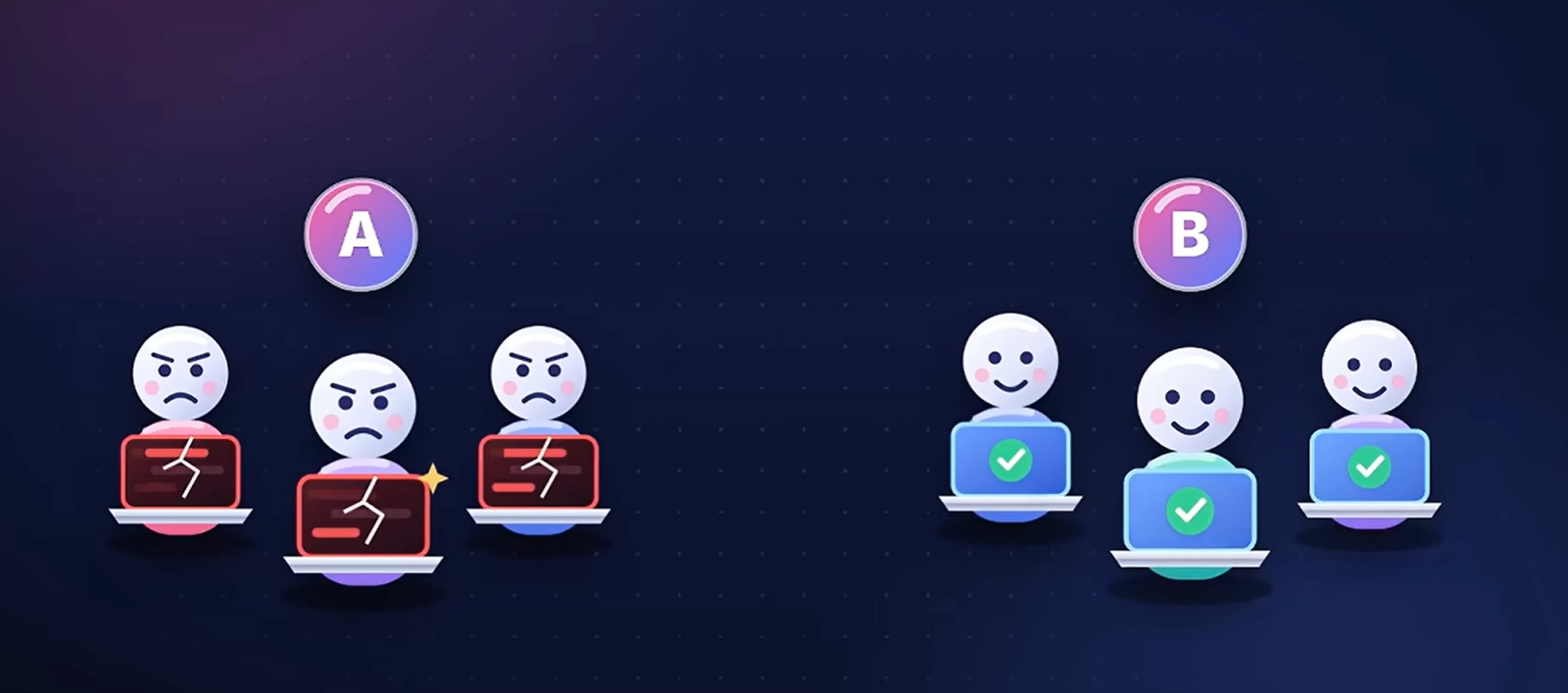
Artificial Intelligence Providers (Anthropic, Open AI, etc.) have become an essential part of any software or software-based solution development.
Here at Moonlight 365 and across the entire software solutions and development world, using Artificial Intelligence to support software development has become an essential part of the development process. This includes code checking, snippet development, analysis and more. Many solution providers use AI Models for much more than code development assistance; they will build AI models that “so to speak” live inside the software application they are developing that do specific processing of data within the workflow of a software task. Since it is likely that the readers of this post are not focused on software development, it is important that we keep the points in this post at a high level because the understanding of the issue is more important than the specific details of any specific coding issue.
Traditional Software Platforms where software development is being done provided update notifications.
For decades, it has been common practice for software companies who have large user bases to publish any changes, updates, bug fixes, feature additions to be provided in writing, in advance, to their user base in the form of bulletin that clearly delineates any and all changes. As a result, IT Leadership in Organizations, Software Development Companies, and the like can preview the update prior to implementation, and decide if the update will be deployed into production for that Organization. This update tenant has historically been one of the key ingredients for building trust and reliability in both the use of systems by organizations, and for software developers to use a third party solution in the development of their own software.
Anthropic and OpenAI, among others, have provided to the markets explicit documentation stating that they will publish API’s for use in software development and that those models will have specific ids, versions, and weights. This is known as a Model ID. The AI Providers state clearly that there will be no configuration changes to any Model ID’s. If any changes are made to the Model, it will get a new Model ID. This is exactly what the market needs and the AI providers are stating it is their promise regarding Model Delivery.
Always Read the Fine Print. Especially when financial incentives run counter to the top line agreement.
Upon a deeper review of Anthropic documentation, the fine print is where the problem for software developers and Organizations that are building their own solutions. The promise of “Model Change” as stated in the documentation is true and there is no case to be made that there are changes being made to the model by any of AI companies once an ID is provided. However, in Anthropic’s documentation, it also states that while the model will stay fixed, the infrastructure around serving the model can change, without notification. The implication of this is that the use of a specific Model that was scoped to provide a specific set of analysis or task execution can change. Anthropic directly acknowledges that the components which are used to execute the Model, can have a result in changing AI results. To quote El, a PhD in Computer Science YouTube Channel Expert, “You can ask for the same model, send it the same instructions and get a different experience because something in the model has shifted.”
Try It Yourself. At this current moment, consistency and repeatably in your workflows may not be what you are paying for with AI.
Every user of AI has noticed something that most times they simply brush off.But it is a minor example of the issues brought to the fore by the speaker “El, the PhD in Computer Science” in the video this blog post is meant reiterate [Link provided below].If you use An AI to summarize a document or email, or you use it to reword something you have written for clarity or to add some marketing punch you will be impressed by the AI results. You will really be impressed if you only ask the AI to do this “one time” on the same email, or the same document. But if you have already done it once on a document, and you take a copy of that document or email, and ask it to do it again, you will notice you do not get an identical response. In some cases, the differences are more than just the style of response. Stanford, Harvard, and MIT have all studied these types of behaviors in AI responses, and the summary of their reviews is best put by the peer-reviewed study in the Harvard Data Science Review like this:
- Drastic Performance Fluctuations: “The study proved that the exact same prompts yielded significantly different levels of accuracy depending on the month the model was accessed.” To Read More from the Harvard Article, click here.
What does this mean for your Organization, your Software as a Service, your AI Built solutions?
The answer to this question is very nuanced. If your “solution” has an AI “inside” of the process, and that same “AI” does analysis, assessments, processing of data, or identifying of values that add to the automation process in some way, your organization might find intermittent failures that cannot be explained by a review of the code or workflow.
If you are using an AI to directly assess something and provide that data back to a human directly, such as one would see in a chat experience, it is unlikely that you should have any concerns.
What if anything, should we do as consumers of AI services about this well documented issue?
The answer to this question is actually straightforward. Buyers of AI Services will need the government to create the legal leverage to ensure that AI Services when purchased, cannot change without advanced notice any element of a given AI Model. We don’t want to be in the business of telling AI Companies what is best for AI deliverables, but we are entitled to consumer protection on the basis of product deliverable consistency. As an analogy, if every time I purchased a Reese’s Peanut Butter Cup, I received some unknown variable of a Peanut Butter Cup, that may or may not match the label, I would be within my rights to get the company that makes Reese’s to meet product labeling standards. This is no different.
To watch the video that provides all the background and depth of this subject you can go directly to YouTube watch El’s video by clicking here. If you would prefer to read a transcript of the video, click the link below for the PDF. Keep in mind that the Transcript was done by Google AI and may not be perfectly accurate.